
Your Court Order Defines What You Can Drive For
The Utah court that granted your Limited License wrote the specific purposes, hours, and route restrictions into your court order — not the Driver License Division. If your order says "employment Monday through Friday 6:00 AM to 6:00 PM," that's your approved window. If it says "medical appointments as scheduled," you need documentation of each appointment to prove compliance during a traffic stop. The DLD administers the underlying suspension and reflects the Limited License status on your driving record, but the court controls what driving is actually allowed.
This court-centered structure creates significant variation across cases. Two drivers convicted of DUI in the same county on the same day can receive Limited Licenses with completely different approved-purposes lists and time windows depending on what each petitioner demonstrated as essential need and how the judge interpreted that petition. There is no statewide standardized Limited License template — your specific authorization lives in the court order you received after your hearing.
Compare car insurance rates in your state
Get quotes from licensed carriers — no obligation, no spam, results in minutes.
Get Your Free QuoteUtah Limited License Scope
Court-defined
Unlike some states where DMV administers restricted licenses with published statewide rules, Utah courts set each Limited License's approved purposes, hours, and routes individually based on the petition and judge's discretion. Your court order is the binding document.
Utah Code § 53-3-220
Standard Approved Purposes in Utah Petitions
Most Utah Limited License petitions request and receive approval for employment, education, medical appointments, and court-ordered programs including ignition interlock service appointments. Religious services are commonly approved but require specific mention in the petition. Childcare transportation is approved in some cases when the petitioner can demonstrate it as essential and no alternative caregiver is available. Grocery shopping and personal errands are rarely approved as standalone purposes — courts expect you to consolidate errands within approved travel windows for work or other essential purposes.
The petition you filed included proof of need for each purpose: an employer letter for work authorization, school enrollment documentation for education, medical appointment schedules, and IID service provider contact information. The court's order approving your Limited License incorporated those specific purposes. If you did not request a purpose in your petition, it is not on your approved list even if it seems essential now. You cannot add purposes after the fact without filing a motion to modify the court order.
Your approved hours and routes are equally specific. If your work schedule changes or you change employers, the original court order does not automatically expand to cover new hours or a new commute route. You must return to court with a motion to modify, supported by documentation of the new employment or schedule, and wait for the judge to approve the modification before driving under the new parameters.
Stopping for groceries or personal errands during an approved work commute violates your court order unless those errands were explicitly approved as separate purposes in your petition.
How Route and Time Restrictions Work in Practice

If your order says "employment purposes Monday through Friday 6:00 AM to 6:00 PM," you are authorized to drive to and from work and for work-related errands during those hours on those days. Driving to work on Saturday because your employer asked you to cover a shift violates the order unless your petition specifically covered weekend work. Driving at 6:15 PM because you stayed late at work still violates the order — the time window is a hard boundary, not a guideline. Courts expect you to plan your work schedule around the approved hours, not the reverse.
Medical appointments and IID service appointments are usually approved "as scheduled," meaning you can drive to and from those appointments whenever they occur, but you need documentation proving the appointment was actually scheduled for that date and time. Carry appointment confirmation letters, IID service receipts, or prescription pickup records in your vehicle. A traffic stop outside your approved employment hours with no documentation to prove an authorized medical or IID appointment will be treated as a violation.
Related Articles




What Happens When You Violate Limited License Terms
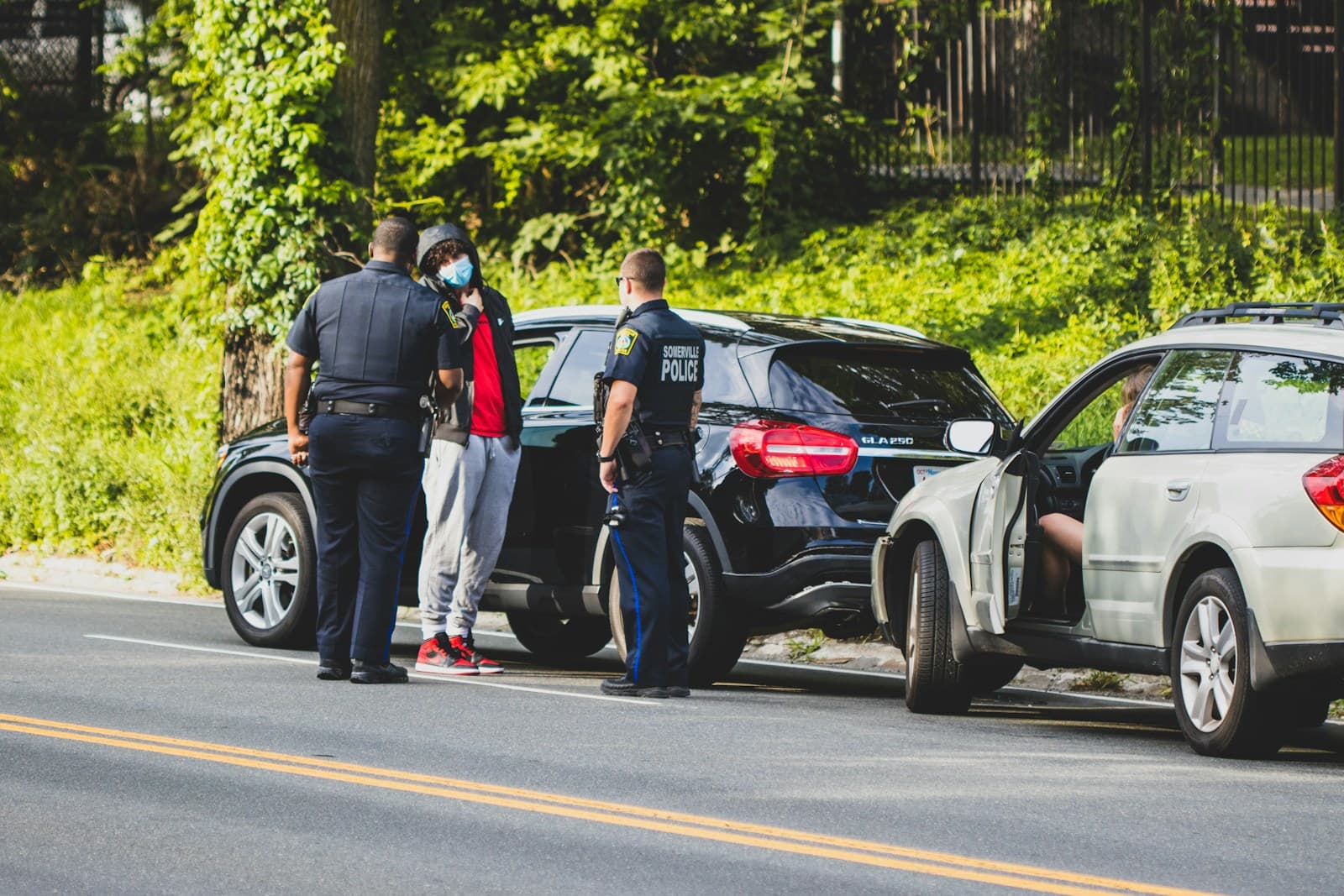
Driving outside your approved purposes, hours, or routes triggers immediate consequences. A traffic stop for any reason — speeding, equipment violation, checkpoint — becomes a compliance audit. The officer will review your court order and compare it to where you are, what time it is, and where you say you were going. If you are outside the boundaries, you will be cited for driving on a suspended license under Utah Code § 53-3-227, which carries up to six months in jail and a $1,000 fine for a class B misdemeanor. The Limited License does not protect you when you are driving outside its terms — you are treated as driving on a suspended license.
The court that issued your Limited License can revoke it without a new hearing if you are convicted of violating its terms. Once revoked, you serve the remainder of your original suspension period with no restricted driving privileges. You cannot petition for a new Limited License during that time. The ignition interlock requirement continues to run — you still pay monthly monitoring fees even though you cannot legally drive. Most judges will not grant a second Limited License to a driver who violated the first one.
Your SR-22 insurance filing is also at risk. If your carrier learns you were cited for driving on a suspended license, they may non-renew your policy at the next term. Losing SR-22 coverage triggers automatic suspension by the DLD under Utah's financial responsibility law, and that suspension stacks on top of your existing suspension. You cannot reinstate without obtaining new SR-22 coverage, which will be significantly more expensive after a suspended-license citation.
Utah SR-22 Filing Period
3 years
SR-22 financial responsibility filing is required for three years following DUI-related suspensions in Utah. The filing period begins when you obtain coverage and file SR-22 with the DLD, not when your suspension starts. Any lapse in coverage restarts the three-year clock.
Utah Code § 41-12a-804
Modifying Your Limited License If Your Situation Changes
You can file a motion to modify your Limited License court order when your employment, education, or medical situation changes. The motion must include the same level of documentation you provided in your original petition: new employer letter with specific work hours and location, school enrollment verification with class schedule, or medical treatment plan with appointment frequency. The court will schedule a hearing, typically within 30 days, and the judge will decide whether to approve the modification.
The existing Limited License remains in effect with its original terms until the judge signs the modified order. You cannot begin driving under the new hours or to the new location just because you filed the motion — the modification is not effective until the court approves it. If you need to start a new job immediately and cannot wait for the hearing, you must arrange alternative transportation until the modification is granted or risk a suspended-license citation.
What to Do Right Now
Read your court order word for word and write down your approved purposes, approved hours for each purpose, and any route restrictions the judge imposed. If your order says "direct route," plan the shortest driving path between your home and each approved destination and do not deviate. If it says "reasonable route," you have slightly more flexibility, but stopping for personal errands still requires that errands were listed as an approved purpose in your petition.
Carry three documents in your vehicle at all times: a copy of your court order granting the Limited License, your current SR-22 insurance card, and documentation for any appointment-based travel such as IID service receipts or medical appointment confirmation letters. These documents are your proof of compliance during a traffic stop. If you cannot produce them, the officer will treat the stop as driving on a suspended license even if you were technically within your approved hours.
If your work schedule, employer, or home address has changed since your Limited License was granted and your current driving no longer fits within your court order, file a motion to modify immediately rather than driving outside your approved terms and hoping you do not get stopped. One suspended-license citation will cost you the Limited License entirely and leave you with no legal driving options for the remainder of your suspension period.