
Two Georgia LDP Tracks After July 2024
You were arrested for DUI last week. Georgia Department of Driver Services sent you an administrative license suspension notice giving you 30 days to request a hearing or install an ignition interlock device. Your attorney mentioned a Limited Driving Permit but didn't clarify whether you're applying through court or electing the new Ignition Interlock Limited Driving Permit track that went live July 1, 2024.
Georgia now operates two structurally different LDP pathways. The traditional court-petition LDP requires a Superior Court judge to approve your petition and carries court-defined restrictions. The new IILDP track created by HB 205 allows DUI arrestees to elect an IID-equipped permit immediately after arrest, bypassing the administrative license suspension hearing process entirely. The tracks have different timing windows, different IID installation requirements, and different enrollment procedures. Most drivers don't realize they're choosing between two permits until they've already missed the IILDP election window.
Compare car insurance rates in your state
Get quotes from licensed carriers — no obligation, no spam, results in minutes.
Get Your Free QuoteIILDP Election Window
30 days
DUI arrestees have 30 days from the date of arrest to elect the Ignition Interlock Limited Driving Permit under O.C.G.A. § 40-5-64.1. Missing this window forces you into the traditional administrative license suspension track, where you cannot drive until a court grants a standard LDP petition.
O.C.G.A. § 40-5-64.1 (HB 205, effective July 1, 2024)
What Each Georgia LDP Type Actually Covers
The court-petition LDP is issued by a Superior Court judge after reviewing your petition and proof of need. Approved purposes typically include employment, medical appointments, school, court-ordered programs (DUI Risk Reduction, community service), and religious services. The judge defines your permitted hours and routes. There is no universal statewide restriction — your LDP documentation states exactly where and when you can drive. For DUI and uninsured-related suspensions, SR-22 proof of insurance is required before the court will issue the permit.
The IILDP operates differently. You elect it within 30 days of arrest by installing a certified ignition interlock device and filing proof of installation with DDS. Once installed, the IILDP allows you to continue driving without waiting for a court hearing. The permit is valid during the entire administrative suspension period. Routes and hours are not court-restricted, but every trip requires you to pass the IID breath test before the vehicle starts. SR-22 filing is mandatory for IILDP enrollment.
The structural difference: court LDP = discretionary approval with judge-defined restrictions. IILDP = administrative enrollment with device-enforced restrictions. Court LDP requires you to prove hardship to a judge; IILDP requires you to install the device and maintain it for the suspension period.
If you miss the 30-day IILDP election window, you cannot go back and elect it later. You are locked into the traditional administrative suspension track and must petition the court for a standard LDP.
Court LDP Petition Process in Georgia

File your petition in the Superior Court of the county where you were arrested or the county where you live. The petition must state your reason for needing the permit (employment address, work hours, medical appointment schedule, school enrollment documentation). Attach proof: employer letter on company letterhead stating your work address and shift times, medical appointment records, school enrollment verification. For DUI and uninsured-motorist suspensions, attach your SR-22 certificate of insurance filed with DDS. The court clerk will assign a hearing date, typically within 30 to 60 days of filing.
At the hearing, the judge reviews your petition and proof. If approved, the judge issues a court order defining your permitted purposes, hours, and routes. The order is your LDP — it is a paper document, not a replacement driver's license card. Carry the court order and your suspended license whenever you drive. If the judge denies your petition (common reasons: unpaid fines, incomplete documentation, insufficient hardship proof), you cannot drive legally until you cure the deficiency and refile.
Related Articles




IILDP Election Steps and SR-22 Setup
To elect the IILDP within your 30-day window, contact a Georgia-certified ignition interlock vendor (LifeSafer, Smart Start, Intoxalock, or another DDS-approved provider). Schedule installation. The vendor installs the device in your vehicle and provides a certificate of installation. File the certificate with DDS within the 30-day election period. Once DDS processes your filing, your IILDP is active and your administrative suspension is lifted for the duration of IID compliance.
Before filing the IID certificate, obtain SR-22 insurance. Call a carrier writing SR-22 in Georgia (Progressive, GEICO, State Farm, Dairyland, The General, or a non-standard carrier like Acceptance or Bristol West). Request SR-22 filing. The carrier files the SR-22 certificate electronically with DDS, typically within 1 to 3 business days. You must maintain continuous SR-22 coverage for 3 years from the date DDS requires it. If your policy lapses or cancels, the carrier notifies DDS and your IILDP is revoked immediately.
IID installation costs typically run $75 to $150. Monthly monitoring and calibration fees average $60 to $90 per month. SR-22 filing adds $15 to $50 to your policy premium depending on carrier. The total cost stack for IILDP: installation, monthly IID fees for the suspension period (1 year for first-offense DUI, longer for repeat offenses or aggravated cases), and elevated SR-22 insurance premiums for 3 years.
Georgia Reinstatement Fee
$200
After your suspension period ends and you have completed all DUI Risk Reduction Program requirements, DDS charges a $200 reinstatement fee to restore full driving privileges. This fee applies to most suspension types, including DUI and uninsured-motorist violations. Pay online at online.dds.ga.gov or in person at a DDS Customer Service Center.
Georgia Department of Driver Services fee schedule
What Violates Your Georgia LDP
Court LDP violations: driving outside your court-approved hours, driving to a location not listed in your court order, failing to carry the court order and suspended license, or getting cited for any new traffic offense while on LDP. Any violation triggers immediate LDP revocation. The court will not reissue the permit until you petition again and prove compliance.
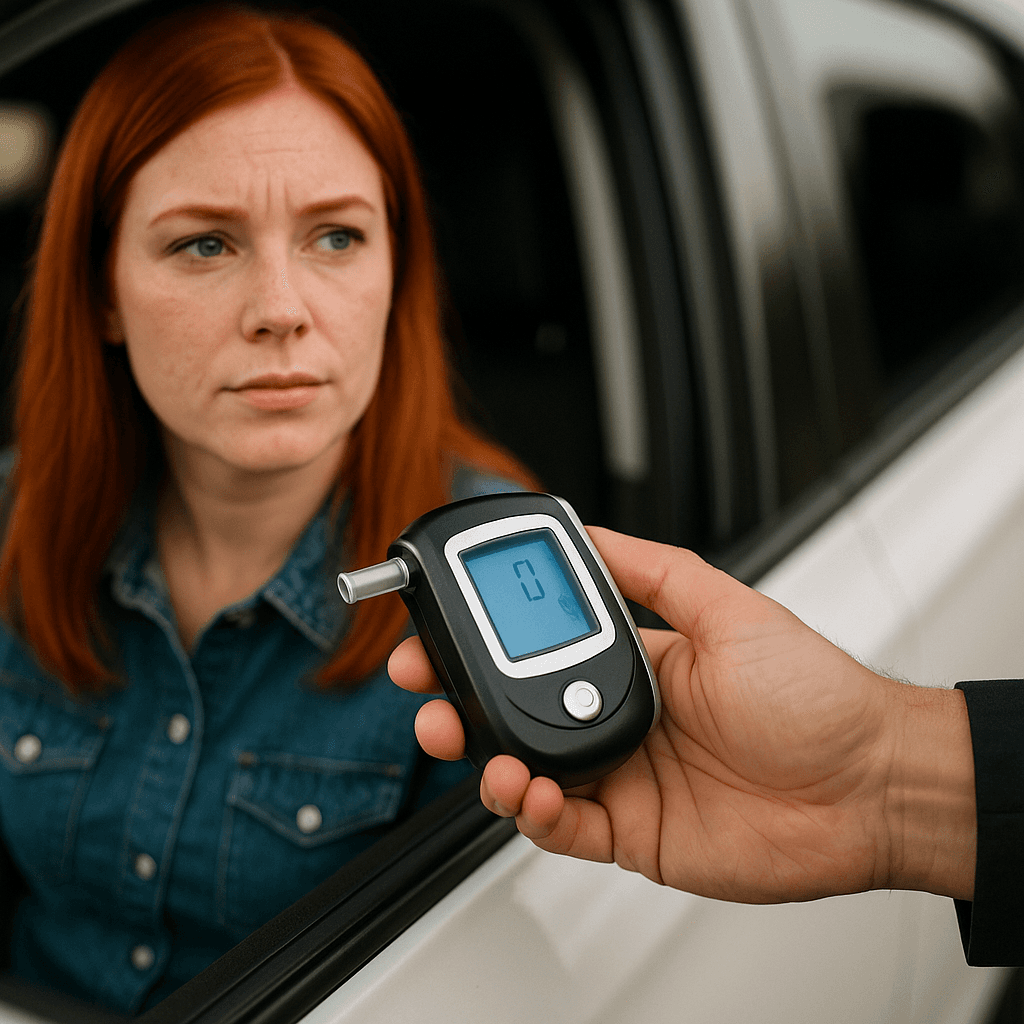
IILDP violations: failing an IID breath test (BAC above the device threshold, typically 0.025), attempting to tamper with or bypass the device, missing a required monthly calibration appointment, or allowing your SR-22 insurance to lapse. The IID vendor reports calibration failures and tamper attempts to DDS within 48 hours. DDS revokes your IILDP and reinstates the full administrative suspension. You lose all driving privileges immediately and cannot re-elect IILDP.
Compare Georgia LDP Carriers and File SR-22
Whether you're filing for court LDP or IILDP, SR-22 setup is the same procedural step. Not all Georgia carriers write SR-22 policies for suspended drivers. Progressive, GEICO, and State Farm write SR-22 but may decline DUI risks depending on your conviction date and prior history. Dairyland, Bristol West, Acceptance, and The General specialize in high-risk SR-22 filings and typically accept DUI applicants.
Request quotes from at least three carriers. Provide your suspension notice, conviction date, and DUI case details. Monthly premiums for SR-22 DUI coverage in Georgia typically range from $140 to $240 per month for minimum liability limits ($25,000 per person, $50,000 per accident, $25,000 property damage). Full coverage with comprehensive and collision adds $80 to $150 per month depending on vehicle value. Estimates based on available industry data; individual rates vary by driving history, vehicle, coverage selections, and location. Compare SR-22 filings and Georgia-specific LDP coverage paths using the site's carrier comparison tool to find the lowest available rate in your county.