
Alaska Limited License Requires Court Petition—No DMV Path Exists
Your license was suspended after a DUI in Alaska, and you need to drive to keep your job. The state calls it a Limited License, but unlike most other states, Alaska offers no DMV administrative application path—every Limited License petition goes through the court system under AS 28.15.201. That means you're subject to judicial discretion, not standardized DMV processing. Two drivers with identical first-offense DUI records can petition different judges in different districts and receive entirely different outcomes: one gets a Limited License with approved work routes in three weeks, the other gets denied outright.
This article maps Alaska's court-controlled Limited License pathway and identifies what actually blocks most petitions. You'll see the specific documentation Alaska courts require, the ignition interlock device mandate that applies to all DUI-related Limited Licenses, the SR-22 filing setup you must complete before petitioning, and the cost stack most drivers underestimate. If you're trying to figure out whether a Limited License is even possible in your case—or why your first petition was denied—this is the procedural reality.
Compare car insurance rates in your state
Get quotes from licensed carriers — no obligation, no spam, results in minutes.
Get Your Free QuoteAlaska Reinstatement Fee
$100
Alaska DMV charges a $100 base reinstatement fee after your full suspension period ends, separate from any Limited License petition costs. This fee applies regardless of whether you held a Limited License during suspension.
Alaska Division of Motor Vehicles fee schedule
Court Discretion Means No Guaranteed Outcome
Alaska's Limited License statute (AS 28.15.201) grants judges broad discretion to approve or deny petitions based on demonstrated need and public safety assessment. There is no checklist that guarantees approval. Employment documentation, proof of SR-22 insurance, and ignition interlock installation records all strengthen your petition, but the judge still evaluates whether granting limited driving privileges serves public safety. Some judges require documented proof that no alternative transportation exists—public transit, rideshare, family assistance. Others focus on your violation history and whether you've completed required alcohol education or treatment programs.
First-offense DUI cases with clean prior records typically have better outcomes than repeat offenders, but even first offenders face denial if they cannot demonstrate specific, verifiable need or if their petition lacks required documentation. Under AS 28.35.030, Alaska law mandates a 90-day hard suspension period for first-offense DUI before any Limited License petition will be heard. You cannot petition during that 90-day window—the court will not consider it. Subsequent offenses carry longer mandatory periods with no Limited License eligibility during the hard suspension.
Geographic reality compounds the discretion problem. Judges in Anchorage, Fairbanks, and Juneau hear Limited License petitions regularly and have established procedural norms. Judges in smaller districts may see one or two petitions per year, creating inconsistent application of the same statute across Alaska's judicial system.
Alaska's 90-day hard suspension for first-offense DUI is absolute—no Limited License petition will be heard before that period ends, regardless of employment need or hardship.
What Alaska Courts Require in Your Limited License Petition
The petition itself must state your specific approved purposes for driving: employment (with employer letter on company letterhead stating work address, hours, and that no alternative transportation exists), medical treatment (with provider documentation of recurring appointments and medical necessity), education (with school enrollment verification and class schedule), or other purposes the court deems necessary. Generic statements like "need to drive for work" are insufficient—you must provide employer name, work site address, required work hours, and an explanation of why rideshare or public transit cannot meet that need. Alaska's limited road network in many communities makes the "no alternative" argument stronger than in lower-48 states, but you still must document it.
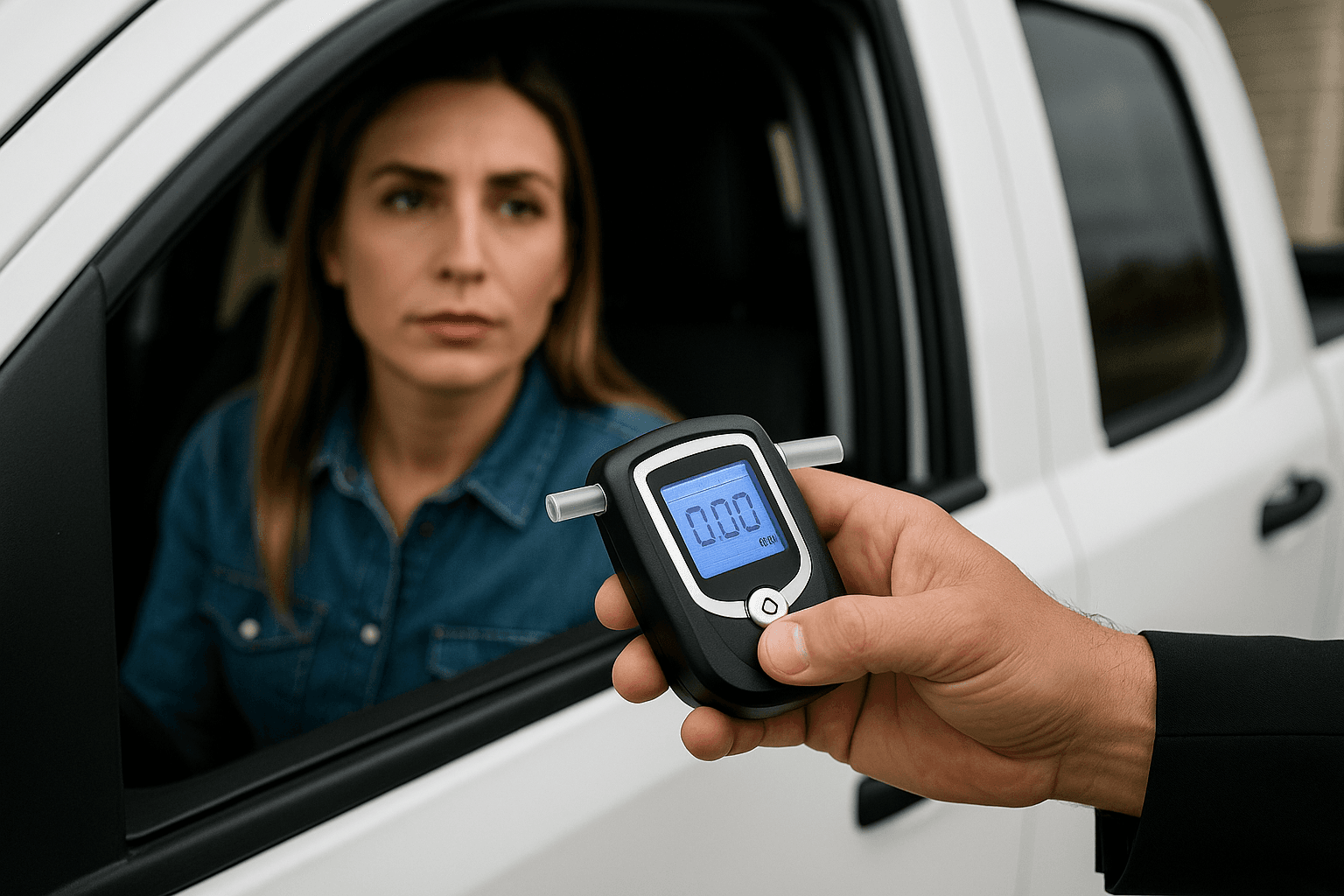
SR-22 certificate of financial responsibility must be filed with Alaska DMV before the court will consider your petition. Most carriers can file SR-22 electronically within 24 hours, but you need proof of filing—the DMV confirmation letter or email showing your SR-22 is on file with the state. Ignition interlock device installation is required for all DUI-related Limited Licenses under AS 28.35.030. You must have the device installed by an approved Alaska IID vendor and provide the installation certificate as part of your petition. IID vendors are concentrated in Anchorage, Fairbanks, and Juneau. Residents of roadless bush communities face practical inability to comply with IID requirements because no local vendor exists—this creates a de facto hardship-within-a-hardship problem that some judges acknowledge and others do not.
Related Articles


Route Restrictions Reflect Alaska's Fragmented Road Network
Alaska Limited License route restrictions are defined by approved purpose, not by specific mileage radius from your home. The court order will state that you are authorized to drive for employment, medical treatment, education, or other approved purposes—and your actual routes must align with those purposes. Unlike lower-48 states where "home to work" can be mapped on contiguous road grids, Alaska's road network is highly fragmented. Many communities are not road-connected at all. Route restrictions in Anchorage or Fairbanks reference specific road corridors (e.g., Glenn Highway between your residence and work site). In fly-in or ferry-access communities, route-based restrictions may not function at all because there is only one road in and out.
Time restrictions are set by the court based on your documented need. If your employer letter states you work Monday through Friday, 8 a.m. to 5 p.m., the court typically grants driving privileges limited to those hours plus reasonable travel time before and after shift. Driving outside approved hours—even on an approved route—violates your Limited License terms and can trigger immediate revocation and criminal charges for driving while suspended.
Violating your Limited License restrictions in Alaska is treated as a separate criminal offense. The state does not issue warnings. If you are stopped outside approved hours or off approved routes, the trooper or officer can arrest you on the spot for driving under suspension. That triggers a new suspension period on top of your existing suspension and forfeits any remaining Limited License eligibility.
SR-22 filing must remain continuous throughout your Limited License period and for the full mandated period post-reinstatement—typically 5 years for DUI-related suspensions in Alaska. If your carrier cancels your policy or you let coverage lapse, the carrier reports the cancellation to Alaska DMV electronically, and your Limited License is automatically revoked. You do not receive a grace period. Alaska uses an electronic insurance verification system under AS 28.22, and lapses trigger immediate DMV action.
Alaska SR-22 Filing Period for DUI
5 years
Alaska requires SR-22 certificate filing for 5 years following DUI suspension reinstatement. The 5-year period begins on your reinstatement date, not your conviction date. Letting SR-22 lapse at any point during those 5 years triggers re-suspension.
AS 28.35.030, Alaska DUI penalties
SR-22 Filing Setup and Carrier Access in Alaska
SR-22 is a certificate of financial responsibility, not a separate insurance policy. Your carrier files the SR-22 form electronically with Alaska DMV to prove you carry at least the state's minimum liability coverage: $50,000 bodily injury per person, $100,000 bodily injury per accident, and $25,000 property damage. Alaska does not require PIP or uninsured motorist coverage by statute, but many carriers bundle it into SR-22 policies. You cannot file SR-22 yourself—only a licensed insurance carrier can file on your behalf.
Carriers writing SR-22 in Alaska include Geico, Progressive, State Farm, National General, The General, and USAA (for eligible servicemembers). Not all carriers write SR-22 for DUI suspensions—some decline high-risk applicants outright, others impose waiting periods after conviction. Non-owner SR-22 policies exist for drivers who do not own a vehicle but need to meet SR-22 filing requirements to petition for a Limited License. Non-owner policies provide liability coverage when you drive a borrowed or rented vehicle but do not cover a vehicle you own or regularly use.
Full Cost Stack for Alaska Limited License Pathway
Court petition filing fees vary by district and are not published in a single statewide schedule—expect approximately $50 to $150 based on local court rules. Ignition interlock device installation costs approximately $75 to $150, with monthly monitoring fees of $60 to $90 for the duration of your Limited License period and any post-reinstatement IID requirement. SR-22 filing fee is typically $15 to $50 depending on carrier, charged at policy inception. SR-22 insurance premiums for DUI-suspended drivers in Alaska typically range from $140 to $280 per month depending on age, violation history, coverage selections, and location. Estimates based on available industry data; individual rates vary by driving history, vehicle, coverage selections, and location.
Alaska's $100 reinstatement fee applies when your full suspension period ends and you are eligible to reinstate your unrestricted license. If you held a Limited License during suspension, you still pay the $100 fee at full reinstatement. DUI reinstatement in Alaska also requires documented completion of an alcohol information school or treatment program through an approved provider—this is separate from and in addition to any ignition interlock requirement. Program costs vary by provider but typically range from $300 to $800.
Next Step: Verify Your Eligibility and Start SR-22 Setup
If you are past your 90-day hard suspension period for first-offense DUI (or past the applicable hard period for subsequent offenses), your next step is to secure SR-22 insurance and schedule ignition interlock installation with an approved Alaska vendor. Gather employment documentation, proof of need, and any court-ordered alcohol education or treatment completion certificates. Contact the court in your district to confirm petition filing requirements and hearing schedule—procedural norms vary by district, and some courts require advance notice or specific filing windows. Compare SR-22 carriers writing in Alaska to find coverage that meets Alaska's minimum liability requirements at a monthly premium you can sustain for the full 5-year SR-22 filing period.