
What DC DMV Counts as Essential Need
DC DMV issues Limited Permits only when you can prove the suspension prevents you from reaching work, medical appointments, school, or other court-approved essential activities. Your employer rejection of alternative transportation is not automatic proof. You need a signed statement from your employer on company letterhead confirming your job location, shift hours, and that public transit or rideshare cannot reasonably meet your schedule. The statement must explain why your physical presence is required and why alternative transportation fails.
Medical appointments qualify when you submit documentation from your healthcare provider showing recurring treatment schedules that require personal vehicle access. One-time appointments typically do not meet the threshold. Educational need requires enrollment verification and a schedule showing classes occur outside Metro service hours or at locations Metro does not reach. The DC DMV application form requires all three: proof of suspension trigger, proof of financial responsibility (SR-22 for DUI-related suspensions), and documentation of essential need tied to one of the approved purposes.
Compare car insurance rates in your state
Get quotes from licensed carriers — no obligation, no spam, results in minutes.
Get Your Free QuoteDC Reinstatement Fee
$98
The base reinstatement fee applies when your suspension ends, but you pay this on top of the Limited Permit application costs. Budget for both the filing fee and the fee you will face at the end of your suspension period.
DC DMV fee schedule
DUI Cases Require Ignition Interlock Before Permit Approval
DC issues Limited Permits for DUI-related suspensions, but the ignition interlock device must be installed in the vehicle you plan to drive before DMV approves the permit. You cannot drive to the IID vendor. Someone else drives your vehicle to the installation appointment, or you arrange mobile installation. The IID vendor submits installation verification directly to DC DMV electronically. Your Limited Permit application sits in pending status until DMV receives that confirmation.
Most first-time DUI applicants assume the permit comes first and interlock follows. DC reversed that sequence. The 2015 Comprehensive Impaired Driving and Alcohol Testing Program Amendment Act expanded interlock requirements and tightened enforcement. If you submit your Limited Permit application without confirming IID installation, DMV denies the application and you reapply from the beginning. Budget $150 to $200 for installation and $70 to $90 per month for monitoring and calibration. The monitoring period typically runs three years, matching the SR-22 filing requirement.
DC DMV will not approve a Limited Permit for DUI cases until the ignition interlock device is installed and the vendor confirms installation electronically. Installation must happen before you submit the application.
Required Documentation for DC Limited Permit Application
Proof of essential need requires an employer statement on company letterhead with your supervisor's signature, contact information, job location address, and shift schedule. If you're applying for medical need, submit a letter from your healthcare provider on office letterhead showing recurring appointment schedules and the specific treatment that requires personal vehicle access. Educational need requires enrollment verification and a class schedule. The documentation must show why the approved purpose cannot be met through public transit, rideshare, or carpooling. Generic statements do not pass review.
Financial responsibility proof depends on your suspension trigger. DUI-related suspensions require an SR-22 certificate filed by a licensed carrier writing in DC. Uninsured driving suspensions also require SR-22. Points accumulation and unpaid tickets typically do not. Your carrier files the SR-22 electronically with DC DMV, but you submit a copy of the SR-22 form with your Limited Permit application to confirm coverage is active. For DUI cases, the IID vendor confirmation must already be on file before DMV processes your application. If your suspension involved unpaid fines, submit receipts proving full payment before applying.
Related Articles
Approved Purposes and Route Restrictions
DC Limited Permits restrict driving to the specific purposes listed in your approval letter. Work means direct travel between your residence and your job site during the hours your employer documented. Medical appointments mean travel to and from the healthcare provider whose documentation you submitted, on scheduled appointment dates only. School means travel to and from your enrolled institution during documented class times. Religious services qualify when you submit documentation from your place of worship confirming your role or regular attendance schedule.
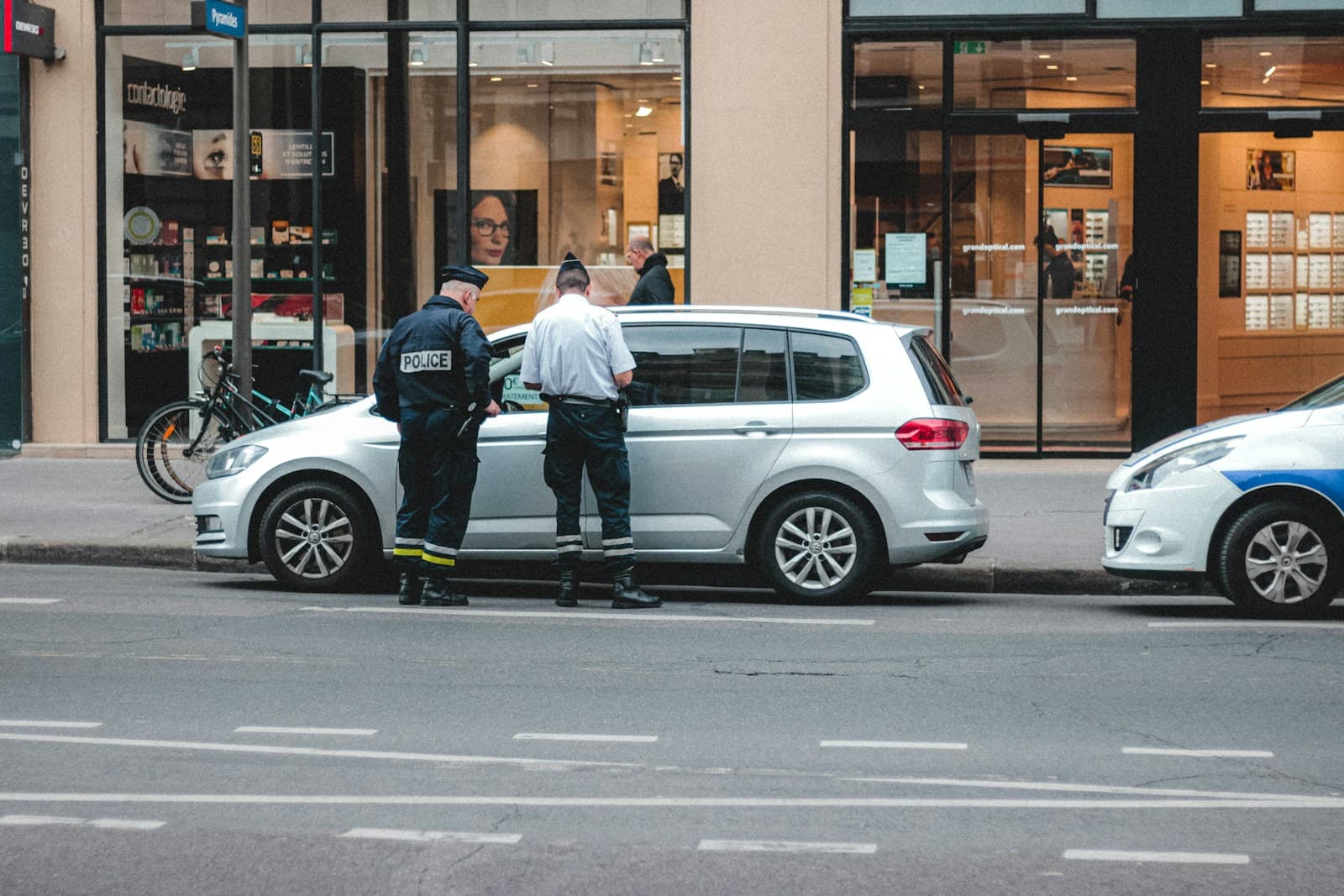
The permit does not cover errands, childcare drop-off, grocery shopping, or social visits. DMV may approve additional purposes if the court orders it or if you petition with documentation showing extraordinary hardship. Most applicants receive work-only or work-plus-medical approval. Route restrictions require you to take the most direct path between approved locations. Stopping for gas or food on the route is permitted, but detours are not. Law enforcement checks your permit terms during traffic stops. Violating the approved purposes or driving outside approved hours triggers immediate revocation and extends your full suspension period.
Time restrictions appear on your permit document. If your employer shift runs 7 a.m. to 4 p.m., your permit authorizes driving one hour before and one hour after shift times to allow for commute variability. Medical appointments authorize driving within a two-hour window around the scheduled time. The permit does not authorize weekend driving unless your documented work schedule includes weekends. Keep copies of your employer statement and appointment confirmations in the vehicle at all times.
SR-22 Filing Period Post-DUI
3 years
DC requires SR-22 filing for three years after DUI conviction. The period begins on your conviction date, not your reinstatement date. If you wait two years to apply for reinstatement, you still owe one additional year of SR-22 coverage after reinstatement.
DC Code § 50-1401.01
Application Processing and Denial Appeals
DC DMV processes Limited Permit applications administratively for first-offense DUI cases and most points-accumulation suspensions. Processing time varies but typically runs two to four weeks from the date DMV receives a complete application packet. Incomplete applications sit in pending status until you submit missing documentation. DMV does not notify you of deficiencies proactively in most cases. Check application status online or call the DC DMV Adjudication Services division directly.
If DMV denies your application, the denial letter states the specific reason. Common denial triggers include insufficient proof of need, missing SR-22 filing, IID installation not confirmed, or unpaid fines still on record. You may reapply immediately after correcting the deficiency. Repeat-offense DUI cases and aggravated suspensions require a formal hearing before an Administrative Law Judge. The hearing is scheduled separately, and you receive notice of the date and required documentation. Bring all proof-of-need documents, SR-22 confirmation, IID installation receipt, and any court orders related to your suspension. The judge decides whether to grant the Limited Permit and under what restrictions.
What Happens After Limited Permit Approval
Once approved, DC DMV issues your Limited Permit as a physical card. You carry this card with your regular driver's license (if not fully revoked) or in place of your license if revoked. The permit lists your approved purposes, authorized driving hours, and expiration date. The expiration date typically matches the end of your suspension period. If your suspension runs one year, your Limited Permit expires at the one-year mark. You must apply for full reinstatement separately when the suspension period ends.
Full reinstatement requires payment of the $98 reinstatement fee, proof that SR-22 coverage remains active, and confirmation that IID monitoring requirements are met (for DUI cases). If you completed an alcohol education program as part of your DUI sentencing, submit the completion certificate. DC DMV processes reinstatement applications within one to two weeks. Your SR-22 filing obligation continues for three years from your conviction date, even after reinstatement. Canceling SR-22 coverage before the three-year period ends triggers a new suspension. Compare SR-22 carriers writing in DC to confirm your current rate remains competitive throughout the filing period.